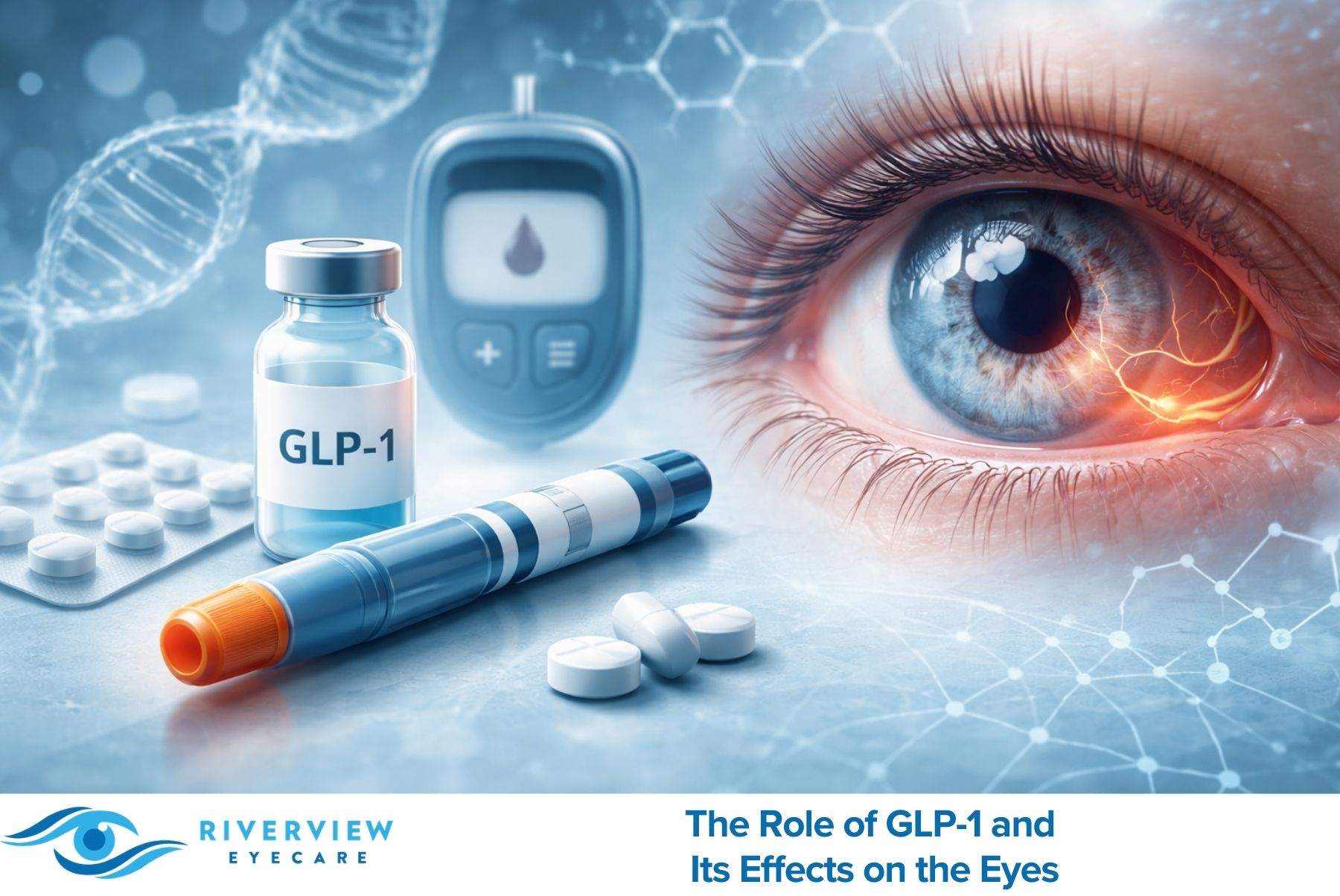
In recent years, medications that target GLP-1 (glucagon-like peptide-1) have gained significant attention for their ability to help manage type 2 diabetes and support weight loss. Drugs such as semaglutide, liraglutide, and similar GLP-1 receptor agonists are becoming increasingly common in treatment plans.
While these medications offer important benefits for blood sugar control and metabolic health, many patients are beginning to ask an important question:
How do GLP-1 medications affect the eyes?
At Riverview Eye Care, we believe patient education is essential for protecting long-term vision. Understanding how systemic medications influence eye health helps patients make informed decisions and recognize when it’s time to schedule an eye exam.
Understanding GLP-1 and How It Works
GLP-1 is a naturally occurring hormone that helps regulate blood sugar levels in the body. It is released from the gut after eating and plays several important roles, including:
- Stimulating insulin production
- Reducing glucagon secretion
- Slowing stomach emptying
- Promoting feelings of fullness
- Helping regulate glucose metabolism
GLP-1 receptor agonists are medications designed to mimic this hormone. They are commonly prescribed for:
- Type 2 diabetes management
- Weight management
- Improving metabolic health
Because these medications influence blood sugar levels, they can indirectly affect several organs—including the eyes.
Why Blood Sugar Control Matters for Eye Health
The eyes contain extremely delicate blood vessels, particularly in the retina, the light-sensitive tissue at the back of the eye.
When blood sugar levels remain high over time, these vessels can become damaged, leading to a condition called diabetic retinopathy.
Diabetic retinopathy is one of the leading causes of vision loss in adults. It occurs when high blood sugar damages retinal blood vessels, causing them to leak, swell, or grow abnormally.
Proper diabetes management—including medications like GLP-1 receptor agonists—can help reduce the long-term risk of this condition.
Potential Eye Effects Associated With GLP-1 Medications
While GLP-1 medications are generally considered safe and effective, some research suggests they may have temporary or indirect effects on vision, particularly in people with diabetes.
Rapid Blood Sugar Improvement
When blood sugar improves quickly, some individuals may temporarily experience:
- Blurred vision
- Difficulty focusing
- Mild visual fluctuations
This occurs because rapid glucose changes can alter the shape of the eye’s lens.
These symptoms are typically temporary and resolve once blood sugar levels stabilize.
Diabetic Retinopathy Progression in Certain Patients
Some studies have suggested that rapid improvements in blood sugar control may worsen diabetic retinopathy in patients who already have advanced disease.
This effect is not unique to GLP-1 medications—it can occur with any treatment that quickly lowers glucose levels, including insulin.
Patients with existing diabetic retinopathy should receive regular eye exams while beginning or adjusting diabetes medications.
Potential Protective Effects
Interestingly, emerging research suggests GLP-1 receptor agonists may also provide protective benefits for the eyes, including:
- Reduced inflammation
- Improved blood vessel health
- Potential neuroprotective effects on retinal cells
These findings are still being studied, but they highlight the complex relationship between metabolic health and eye function.
Symptoms to Watch For
If you are taking a GLP-1 medication and notice any changes in your vision, it’s important to schedule an eye exam promptly.
Symptoms that should not be ignored include:
- Persistent blurred vision
- Sudden vision changes
- Dark spots or floaters
- Flashes of light
- Loss of peripheral vision
- Difficulty focusing
Early detection of eye changes can prevent long-term vision complications.
The Importance of Routine Diabetic Eye Exams
People with diabetes should receive comprehensive dilated eye exams at least once per year.
Regular exams allow eye doctors to detect early signs of:
- Diabetic retinopathy
- Macular edema
- Glaucoma
- Cataracts
Many of these conditions can develop without noticeable symptoms, making routine eye care essential.
At Riverview Eye Care, we use advanced diagnostic technology to detect subtle retinal changes before they affect your vision.
Q&A: GLP-1 Medications and Eye Health
What is GLP-1?
GLP-1 stands for glucagon-like peptide-1, a hormone that helps regulate blood sugar levels. Medications that mimic GLP-1 are commonly used to treat type 2 diabetes and assist with weight loss.
Can GLP-1 medications cause blurry vision?
Some people may experience temporary blurred vision when starting GLP-1 medications because blood sugar levels are improving rapidly. This usually stabilizes as glucose levels normalize.
Do GLP-1 drugs damage the eyes?
GLP-1 medications themselves are not known to directly damage the eyes. However, rapid changes in blood sugar may temporarily affect vision or influence existing diabetic eye disease.
Should people with diabetes have regular eye exams?
Yes. Individuals with diabetes should receive annual comprehensive eye exams to monitor for diabetic retinopathy and other eye conditions.
Can GLP-1 medications improve eye health?
Some research suggests GLP-1 medications may have protective anti-inflammatory effects on retinal tissue, but more studies are needed to fully understand these benefits.
What eye symptoms should prompt an immediate exam?
Seek prompt eye care if you experience:
- Sudden blurred vision
- Floaters or flashes of light
- Dark or missing areas in your vision
- Difficulty focusing
- Persistent visual changes
How can I protect my vision if I have diabetes?
Protecting your vision involves several key steps:
- Maintain healthy blood sugar levels
- Schedule routine eye exams
- Follow your physician’s medication plan
- Eat a balanced diet
- Manage blood pressure and cholesterol
- Report any vision changes immediately
Protect Your Vision With Expert Eye Care
Your eyes are closely connected to your overall health. Whether you are managing diabetes, starting a new medication, or simply want to maintain clear vision, regular eye exams play a critical role in protecting your sight.
The experienced team at Riverview Eye Care is dedicated to helping patients safeguard their vision through comprehensive exams, advanced diagnostic technology, and personalized care.
If you have concerns about GLP-1 medications and your eye health, we are here to help.
Contact Riverview Eye Care
Riverview Eye Care
13135 Kings Lake Dr #101
Gibsonton, FL 33534
Phone: 813-498-1905
Our team is proud to serve Riverview and the surrounding communities with compassionate, patient-focused eye care.