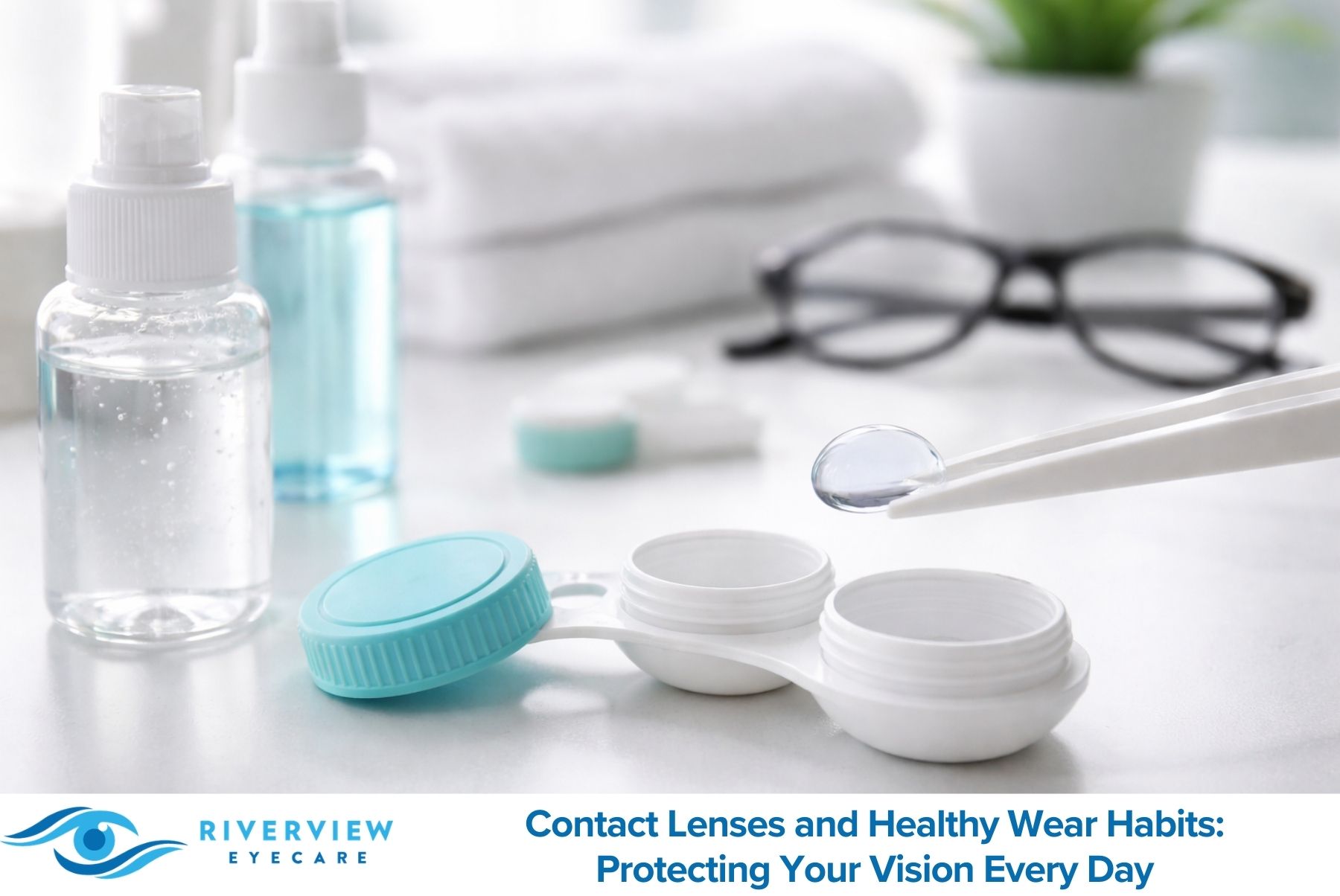
Contact lenses provide millions of people with a convenient and comfortable way to see clearly without relying on glasses. Whether you wear contacts for daily activities, sports, or simply for convenience, proper care and healthy wear habits are essential for maintaining both eye health and clear vision.
At Riverview Eye Care, patients receive expert guidance on choosing the right contact lenses and learning the best habits to keep their eyes healthy. Understanding how to wear, clean, and replace your lenses properly can help prevent infections, irritation, and long-term vision problems.
Understanding Contact Lenses
Contact lenses are thin, curved lenses placed directly on the surface of the eye to correct vision problems such as:
- Nearsightedness (myopia)
- Farsightedness (hyperopia)
- Astigmatism
- Presbyopia (age-related near vision changes)
Modern contact lenses are designed with comfort and oxygen flow in mind, allowing the eyes to stay healthy while providing crisp vision throughout the day.
Common types of contact lenses include:
- Daily disposable lenses
- Bi-weekly lenses
- Monthly lenses
- Rigid gas permeable lenses
- Toric lenses for astigmatism
- Multifocal lenses for presbyopia
Choosing the right lens type depends on your prescription, lifestyle, and eye health. An eye exam and contact lens fitting at Riverview Eye Care ensures your lenses fit comfortably and safely.
Why Healthy Contact Lens Habits Matter
While contact lenses are safe when used properly, poor hygiene and improper wear habits can increase the risk of eye infections, dryness, irritation, and even vision loss.
Some common issues caused by improper contact lens use include:
- Corneal infections
- Eye irritation or redness
- Dry eyes
- Corneal ulcers
- Reduced oxygen to the eye
Healthy wear habits help protect the delicate surface of your eyes and ensure that your contact lenses remain comfortable and effective.
Healthy Contact Lens Wear Habits
1. Always Wash Your Hands First
Before touching your contact lenses or your eyes, wash your hands thoroughly with soap and water and dry them with a lint-free towel. Clean hands help prevent bacteria from transferring to your lenses.
2. Follow Your Lens Replacement Schedule
Never extend the use of your contact lenses beyond their recommended replacement schedule. Overwearing lenses can lead to buildup of protein deposits and bacteria.
For example:
- Daily lenses: discard after one day
- Bi-weekly lenses: replace every two weeks
- Monthly lenses: replace every month
Following the correct schedule keeps your eyes safer and your lenses comfortable.
3. Clean and Store Lenses Properly
If you wear reusable lenses, proper cleaning is essential. Always:
- Use the recommended contact lens solution
- Rub and rinse lenses when cleaning them
- Store lenses in a clean case filled with fresh solution
Never reuse old solution or “top off” solution in the case.
4. Never Sleep in Contacts Unless Approved
Sleeping in contact lenses can significantly increase the risk of infection because the eyes receive less oxygen while closed. Only sleep in lenses if your eye doctor specifically prescribes extended-wear lenses.
5. Avoid Water Contact
Contact lenses should not come into contact with water. Remove lenses before:
- Swimming
- Showering
- Using hot tubs
Water can introduce harmful microorganisms that may cause serious eye infections.
6. Replace Your Contact Lens Case
Your contact lens case should be replaced approximately every three months to prevent bacterial buildup.
7. Give Your Eyes a Break
Even if contacts feel comfortable, giving your eyes occasional breaks by wearing glasses helps reduce dryness and fatigue.
Signs Your Contacts May Be Causing Problems
If you wear contact lenses, it’s important to pay attention to symptoms that may indicate a problem. Contact your eye doctor if you experience:
- Persistent redness
- Eye pain
- Blurry vision
- Light sensitivity
- Excessive tearing
- Eye discharge
Ignoring these symptoms can lead to serious complications. Prompt care helps protect your vision.
The Importance of Regular Eye Exams
Regular eye exams are essential for anyone who wears contact lenses. During your visit, your eye doctor will:
- Evaluate your eye health
- Update your prescription if needed
- Check the fit of your contact lenses
- Screen for early signs of eye disease
Even if your vision seems stable, routine exams help ensure your eyes remain healthy over time.
Contact Lens FAQs
Are contact lenses safe to wear every day?
Yes. Contact lenses are safe for daily wear when used as directed by your eye doctor. Following proper hygiene, replacement schedules, and care instructions greatly reduces the risk of complications.
How long can I wear my contact lenses each day?
Most contact lenses are designed for 10–14 hours of daily wear, but this can vary depending on the lens type and your eye health. Your eye doctor will provide guidance based on your specific lenses.
Can I sleep with my contact lenses in?
In most cases, no. Sleeping in contact lenses increases the risk of infection and irritation. Only lenses specifically approved for overnight wear should be worn while sleeping, and only under the supervision of your eye doctor.
Why do my eyes feel dry when wearing contacts?
Dryness can occur due to:
- Screen time
- Dehydration
- Environmental conditions
- Improper lens fit
- Worn-out lenses
Your eye doctor may recommend lubricating drops or a different lens material to improve comfort.
Can I swim with contact lenses?
Swimming with contact lenses is not recommended because water can contain bacteria and microorganisms that may lead to infections. If you must swim, wear waterproof goggles and remove lenses afterward.
How often should I replace my contact lens case?
Contact lens cases should typically be replaced every three months. Regular replacement helps prevent bacteria buildup and contamination.
What should I do if my eye becomes red or painful while wearing contacts?
Remove your contact lenses immediately and contact your eye doctor if symptoms persist. Continuing to wear lenses during irritation can worsen the problem.
Are daily disposable lenses better for eye health?
Daily disposable lenses are often considered one of the healthiest options because a fresh, sterile lens is used each day. This reduces the risk of buildup and contamination.
Can children or teenagers wear contact lenses?
Yes. Many children and teens successfully wear contact lenses, especially for sports or active lifestyles. The most important factor is whether the child can follow proper hygiene and care instructions.
Do contact lenses expire?
Yes. Contact lenses have expiration dates printed on the packaging. Never use lenses past their expiration date, as sterility and material integrity may be compromised.
Expert Contact Lens Care at Riverview Eye Care
Whether you are new to contact lenses or looking to improve your comfort and eye health, professional guidance makes all the difference. The team at Riverview Eye Care provides personalized fittings, education, and ongoing support to help patients enjoy clear vision safely.
If you’re considering contact lenses or need an updated exam, schedule a visit with Riverview Eye Care today.
Contact Information
Riverview Eye Care
13135 Kings Lake Dr #101
Gibsonton, FL 33534
Phone: 813-498-1905