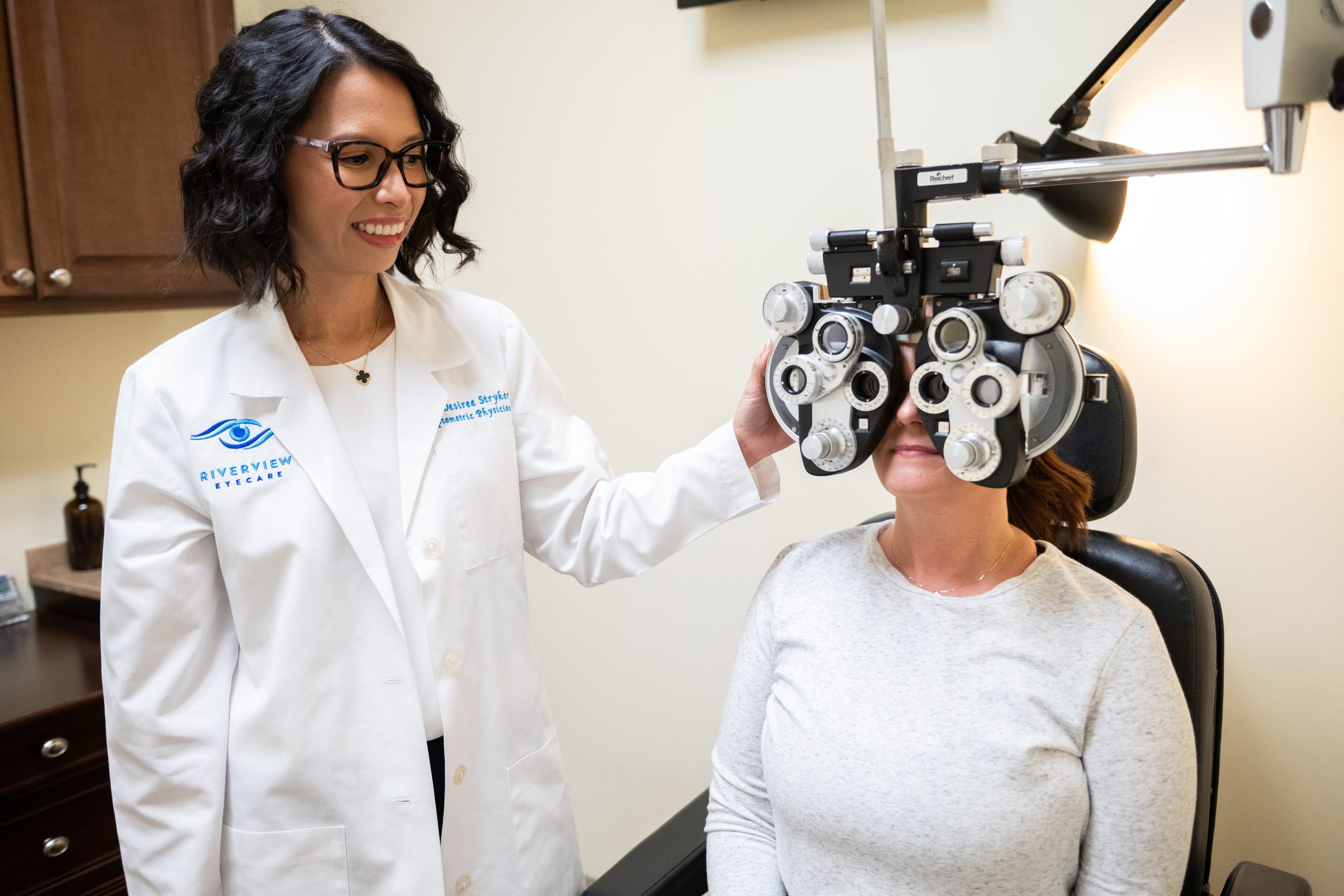
Comprehensive Eye Exams in Riverview & Gibsonton, FL
A comprehensive eye exam is one of the most important health screenings you can have each year. At Riverview Eye Care, every exam is customized to your specific medical history and visual needs. Our doctors evaluate the full ocular system — not just your prescription — and screen for early signs of systemic conditions including high blood pressure, diabetes, and elevated cholesterol, often before symptoms appear elsewhere in the body.
We recommend annual eye exams for patients of all ages, even those with no noticeable vision changes.
Eye Care for the Whole Family
Riverview Eye Care provides comprehensive eye exams for every member of your family — from young children experiencing their first exam to older adults managing age-related vision changes. Our pediatric exams screen for common conditions including nearsightedness (myopia), farsightedness (hyperopia), astigmatism, and amblyopia (lazy eye).
We take extra care to ensure children feel comfortable and at ease throughout the exam, and we make sure parents leave with a clear understanding of their child’s ocular health. If your child shows signs of myopia progression, ask us about our myopia management program.
What to Expect During Your Eye Exam
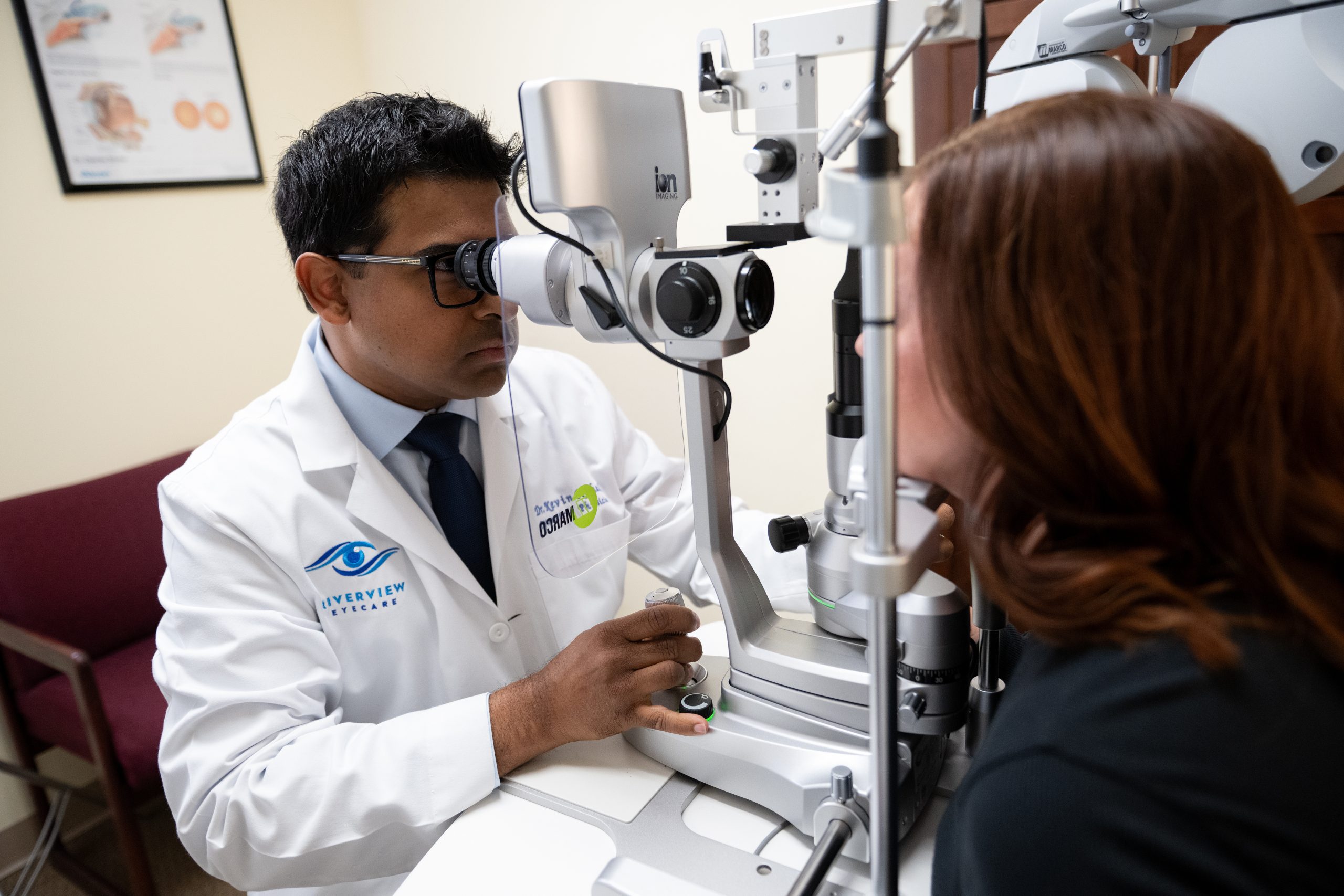
During a comprehensive eye exam at Riverview Eye Care, your optometrist will perform a detailed evaluation that goes well beyond a standard vision screening. Depending on your age, health history, and any symptoms you report, your exam may include visual acuity testing, refraction, binocular vision assessment, intraocular pressure measurement, anterior segment evaluation, and dilated fundus examination.
Our doctors use state-of-the-art diagnostic equipment to examine the health of your cornea, lens, retina, and optic nerve. For patients managing diabetes, hypertension, or other systemic conditions, we provide thorough documentation and co-management with your primary care physician. Learn more about our specialized diabetic eye evaluations and glaucoma screenings.
Frequently Asked Questions About Comprehensive Eye Exams
How often should I get a comprehensive eye exam?
Most adults should have a comprehensive eye exam at least once a year. Patients with diabetes, a family history of glaucoma, or other risk factors may benefit from more frequent visits. Children should be examined annually as well, particularly during the school years when undetected vision problems can affect learning.
What conditions can be detected during a comprehensive eye exam?
Beyond updating your prescription, a thorough eye exam can detect early signs of glaucoma, diabetic retinopathy, macular degeneration, cataracts, high blood pressure, elevated cholesterol, and other systemic health conditions. Early detection is key to preserving long-term vision and overall health.
At what age should children have their first eye exam?
We recommend that children receive their first comprehensive eye exam before starting school, typically around age 5 or 6. If there are concerns about vision or eye alignment earlier, an exam can be performed at any age. Regular exams through the school years help catch conditions like myopia early, when treatment is most effective.
Do I need to have my eyes dilated at every exam?
Dilation is not required at every visit, but it allows your doctor to get the most complete view of the back of your eye, including the retina and optic nerve. Your doctor will recommend dilation based on your age, health history, and any symptoms or risk factors you have.
Can a comprehensive eye exam detect diabetes?
Yes. The blood vessels in the retina are among the first in the body to show signs of diabetic damage. During a dilated exam, our doctors can identify early retinal changes associated with diabetes — sometimes before your primary care physician has detected the condition. If you are on a GLP-1 medication, ask about our GLP-1 eye evaluation service.
What is the difference between a vision screening and a comprehensive eye exam?
A vision screening is a brief test — often performed at a school or pediatrician’s office — that checks basic visual acuity. A comprehensive eye exam is a full medical evaluation of your eyes and visual system, performed by a licensed optometrist using specialized equipment. Only a comprehensive exam can detect the full range of eye diseases and systemic health conditions.
Do you offer contact lens fittings as part of the eye exam?
A contact lens fitting is a separate service that builds on your comprehensive eye exam. Our doctors will evaluate the curvature of your cornea, your tear film, and your visual needs to determine the best lens type for you. Learn more about our contact lens fitting services.