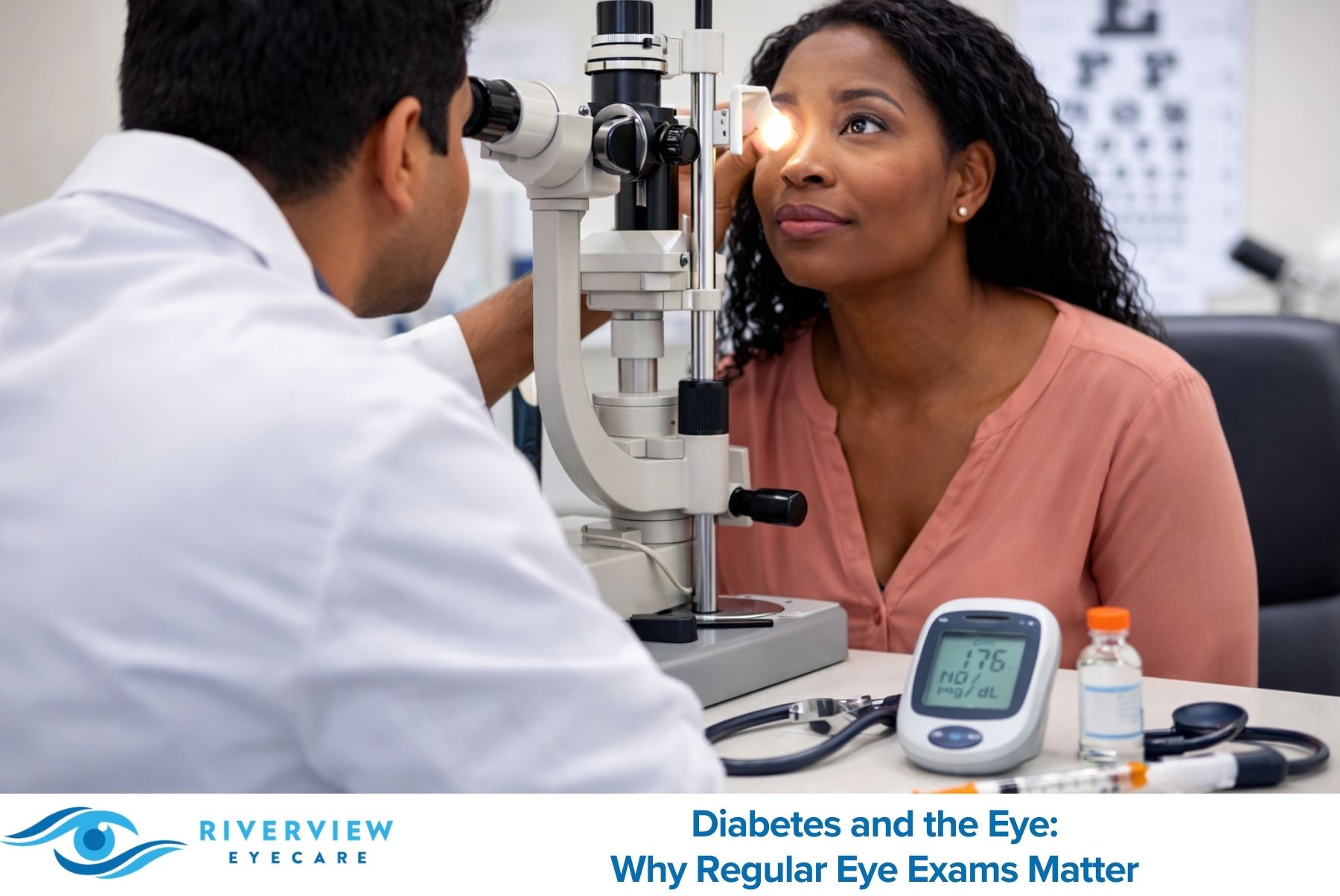
Diabetes affects millions of people in the United States, and while most people are aware of its impact on blood sugar, many do not realize how significantly diabetes can affect the eyes. Vision problems caused by diabetes can develop gradually and without early symptoms, which makes routine eye care especially important for people living with this condition.
At Riverview Eye Care, our team is committed to protecting your vision through comprehensive eye exams, early detection, and personalized treatment recommendations. Understanding the relationship between diabetes and eye health can help you take proactive steps to preserve your sight.
How Diabetes Affects the Eyes
Diabetes can damage the tiny blood vessels throughout the body, including those in the eyes. When blood sugar levels remain elevated for extended periods, these delicate vessels may swell, leak, or become blocked. Over time, this damage can affect the retina, the part of the eye responsible for detecting light and sending visual signals to the brain.
Several eye conditions are closely associated with diabetes.
Diabetic Retinopathy
Diabetic retinopathy is one of the most common diabetes-related eye diseases and a leading cause of vision loss in adults. It occurs when high blood sugar damages the blood vessels in the retina.
Early stages may cause no noticeable symptoms, but as the condition progresses, patients may experience:
- Blurred or fluctuating vision
- Dark spots or floaters
- Difficulty seeing at night
- Vision loss in severe cases
Diabetic Macular Edema
Diabetic macular edema (DME) occurs when fluid leaks into the macula, the central part of the retina responsible for sharp, detailed vision. Swelling in this area can lead to distorted or blurry central vision.
Cataracts
People with diabetes are more likely to develop cataracts earlier in life. Cataracts cause the normally clear lens of the eye to become cloudy, leading to blurred or dim vision.
Glaucoma
Diabetes can also increase the risk of glaucoma, a condition characterized by increased pressure within the eye that can damage the optic nerve.
The Importance of Regular Diabetic Eye Exams
Because many diabetic eye conditions develop without noticeable symptoms, routine eye exams are essential for early detection. During a comprehensive diabetic eye exam, your optometrist may:
- Dilate your pupils to examine the retina
- Look for leaking or damaged blood vessels
- Evaluate the optic nerve
- Check for swelling in the macula
- Monitor changes in vision over time
Early detection allows for more effective treatment and can help prevent permanent vision loss.
Experts generally recommend that people with diabetes receive a comprehensive eye exam at least once a year, though your eye doctor may recommend more frequent visits depending on your individual needs.
Protecting Your Vision When You Have Diabetes
Maintaining healthy eyes with diabetes involves a combination of medical care and lifestyle habits. Key steps include:
- Keeping blood sugar levels under control
- Managing blood pressure and cholesterol
- Maintaining a healthy diet and regular exercise routine
- Avoiding smoking
- Scheduling regular eye exams
These actions not only support overall health but also reduce the risk of vision complications.
When to See an Eye Doctor Immediately
While regular eye exams are important, certain symptoms should prompt an immediate visit to an eye care professional:
- Sudden vision changes
- Dark spots or floaters that appear suddenly
- Blurred or distorted vision
- Partial loss of vision
- Eye pain or pressure
Prompt evaluation can help address potential issues before they become more serious.
Diabetes and Eye Health: Q&A
What is diabetic retinopathy?
Diabetic retinopathy is an eye disease caused by damage to the blood vessels in the retina due to high blood sugar levels. It can lead to vision impairment or blindness if not detected and treated early.
Can diabetes cause blindness?
Yes. If diabetic eye diseases such as diabetic retinopathy or diabetic macular edema progress without treatment, they can lead to significant vision loss or blindness. Early detection significantly reduces this risk.
How often should someone with diabetes have an eye exam?
Most people with diabetes should have a comprehensive eye exam at least once per year. Your eye doctor may recommend more frequent visits depending on your eye health.
What are the early warning signs of diabetic eye disease?
In many cases, there are no early symptoms. However, some people may experience blurry vision, floaters, dark spots, or difficulty seeing at night as the disease progresses.
Can controlling blood sugar help protect my vision?
Yes. Managing blood sugar levels is one of the most effective ways to reduce the risk of diabetic eye disease. Consistent blood sugar control helps prevent damage to the tiny blood vessels in the eyes.
Is diabetic eye disease treatable?
Yes. Treatments such as medications, laser therapy, and other procedures can help slow or stop the progression of diabetic eye disease when detected early.
Are people with Type 1 and Type 2 diabetes both at risk?
Yes. Both Type 1 and Type 2 diabetes can lead to eye complications. The longer someone has diabetes, the greater the risk.
What happens during a diabetic eye exam?
Your eye doctor will examine the retina, optic nerve, and blood vessels in the eye. Pupil dilation may be used to allow a more detailed view of the back of the eye.
Protect Your Vision with Riverview Eye Care
If you have diabetes, protecting your vision should be a priority. Routine eye exams can detect problems early and help prevent long-term complications.
The experienced team at Riverview Eye Care is dedicated to providing thorough diabetic eye exams and personalized care to help you maintain healthy vision for years to come.
Contact Riverview Eye Care
Riverview Eye Care
13135 Kings Lake Dr #101
Gibsonton, FL 33534
📞 Phone: 813-498-1905