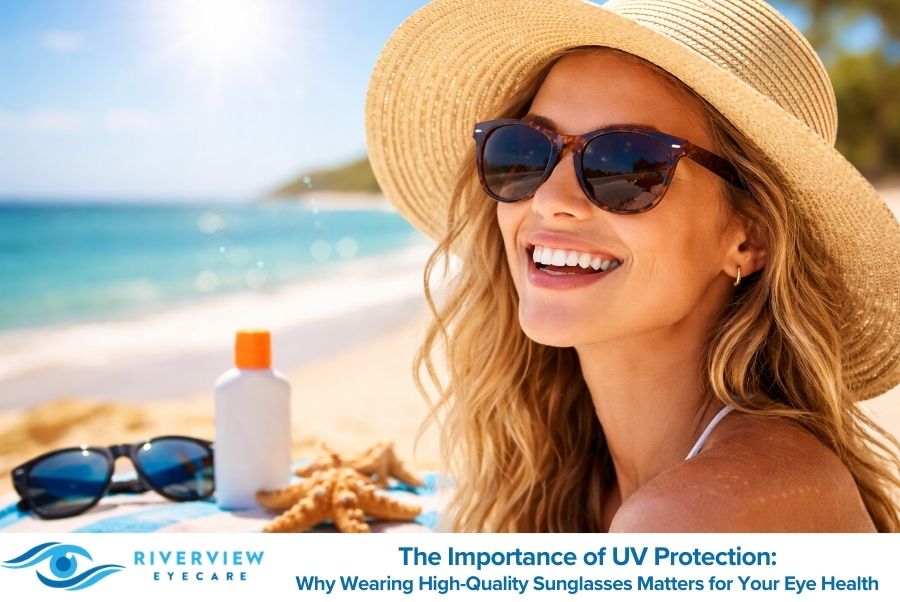
When people think about protecting their skin from the sun, sunscreen often comes to mind. But protecting your eyes from harmful ultraviolet (UV) rays is just as important. Prolonged exposure to UV radiation can lead to serious eye conditions over time, making high-quality sunglasses an essential part of everyday eye care.
At Riverview Eye Care, protecting and preserving your vision is our top priority. Understanding how UV light affects your eyes—and how proper eyewear can prevent damage—can help you maintain healthy vision for years to come.
What Are UV Rays and Why Are They Harmful?
Ultraviolet (UV) rays are invisible rays from the sun that can damage tissues in the eye. The two main types that affect eye health are:
- UVA rays – penetrate deep into the eye and may contribute to long-term damage.
- UVB rays – are more intense and can damage the surface tissues of the eye.
Without proper protection, these rays can increase the risk of developing several eye conditions.
Eye Conditions Linked to UV Exposure
Cataracts
Cataracts cause the lens of the eye to become cloudy, leading to blurry vision and difficulty seeing clearly. Long-term UV exposure is a known risk factor for cataract development.
Macular Degeneration
UV light may contribute to damage in the macula—the part of the retina responsible for central vision—which can lead to age-related macular degeneration.
Photokeratitis (Sunburn of the Eye)
Just like skin, the eyes can get sunburned. Photokeratitis can cause symptoms such as pain, redness, light sensitivity, and temporary vision loss.
Pterygium
Often called “surfer’s eye,” this condition involves abnormal tissue growth on the white of the eye that can extend over the cornea and affect vision.
Why High-Quality Sunglasses Matter
Not all sunglasses provide proper UV protection. In fact, poorly made sunglasses without UV filtering can actually make things worse by causing your pupils to dilate while still allowing harmful rays to enter.
When choosing sunglasses, look for lenses that offer:
- 100% UVA and UVB protection
- UV400 rating for full UV blocking
- Polarized lenses to reduce glare
- Wraparound frames to limit light entering from the sides
Quality sunglasses act as a protective barrier, significantly reducing the amount of UV radiation reaching your eyes.
Everyday Situations Where UV Protection Is Essential
Many people assume sunglasses are only necessary at the beach or during summer, but UV rays are present year-round.
You should wear sunglasses when:
- Driving during daylight hours
- Spending time outdoors
- At the beach or pool
- Hiking, biking, or exercising outside
- During winter activities like skiing or snowboarding
Snow, water, sand, and pavement can reflect UV rays, increasing exposure to your eyes.
Protecting Children’s Eyes
Children’s eyes are especially sensitive to UV radiation. Because they spend more time outdoors and their lenses are clearer than adults’, they can absorb more UV rays.
Parents should ensure their children wear proper UV-protective sunglasses and wide-brimmed hats when outdoors.
Additional Ways to Protect Your Eyes from UV Damage
While sunglasses are the most important tool, you can further protect your eyes by:
- Wearing wide-brimmed hats
- Avoiding direct sunlight during peak UV hours (10 AM – 4 PM)
- Using UV-blocking contact lenses if recommended
- Scheduling routine comprehensive eye exams
Eye exams allow professionals to monitor your eye health and detect UV-related conditions early.
Q&A: UV Protection and Sunglasses
Why is UV protection important for eye health?
UV rays can damage structures inside the eye and increase the risk of cataracts, macular degeneration, and other vision problems. Wearing protective sunglasses helps reduce long-term damage.
Do darker lenses provide better UV protection?
Not necessarily. The darkness of a lens does not determine UV protection. Always check for 100% UV protection or UV400 labeling.
Can UV rays harm my eyes on cloudy days?
Yes. Up to 80% of UV rays can pass through clouds, meaning eye protection is still important even when the sun isn’t visible.
Are polarized sunglasses the same as UV-protective sunglasses?
No. Polarized lenses reduce glare, which improves visual comfort, but they do not automatically guarantee UV protection unless specifically labeled.
Do I need sunglasses in winter?
Absolutely. Snow reflects UV rays and can increase exposure, which is why sunglasses are essential for winter sports and outdoor activities.
Are children more vulnerable to UV eye damage?
Yes. Children’s eyes allow more UV light to reach the retina, making proper protection especially important during early years.
Can contact lenses protect against UV rays?
Some contact lenses offer UV protection, but they only cover part of the eye. Wearing sunglasses in addition to contacts provides better protection.
How often should I replace sunglasses?
If lenses become scratched, warped, or lose their UV coating, they should be replaced. Quality sunglasses can last several years with proper care.
Protect Your Vision with Expert Eye Care
Taking simple steps—like wearing high-quality sunglasses—can make a significant difference in protecting your vision over time. If you’re unsure which sunglasses or protective eyewear are best for you, the experienced team at Riverview Eye Care can help guide you toward the best options for your lifestyle and eye health.
Regular eye exams are essential for maintaining healthy vision and catching potential problems early.
Contact Riverview Eye Care
Riverview Eye Care
13135 Kings Lake Dr #101
Gibsonton, FL 33534
Phone: 813-498-1905