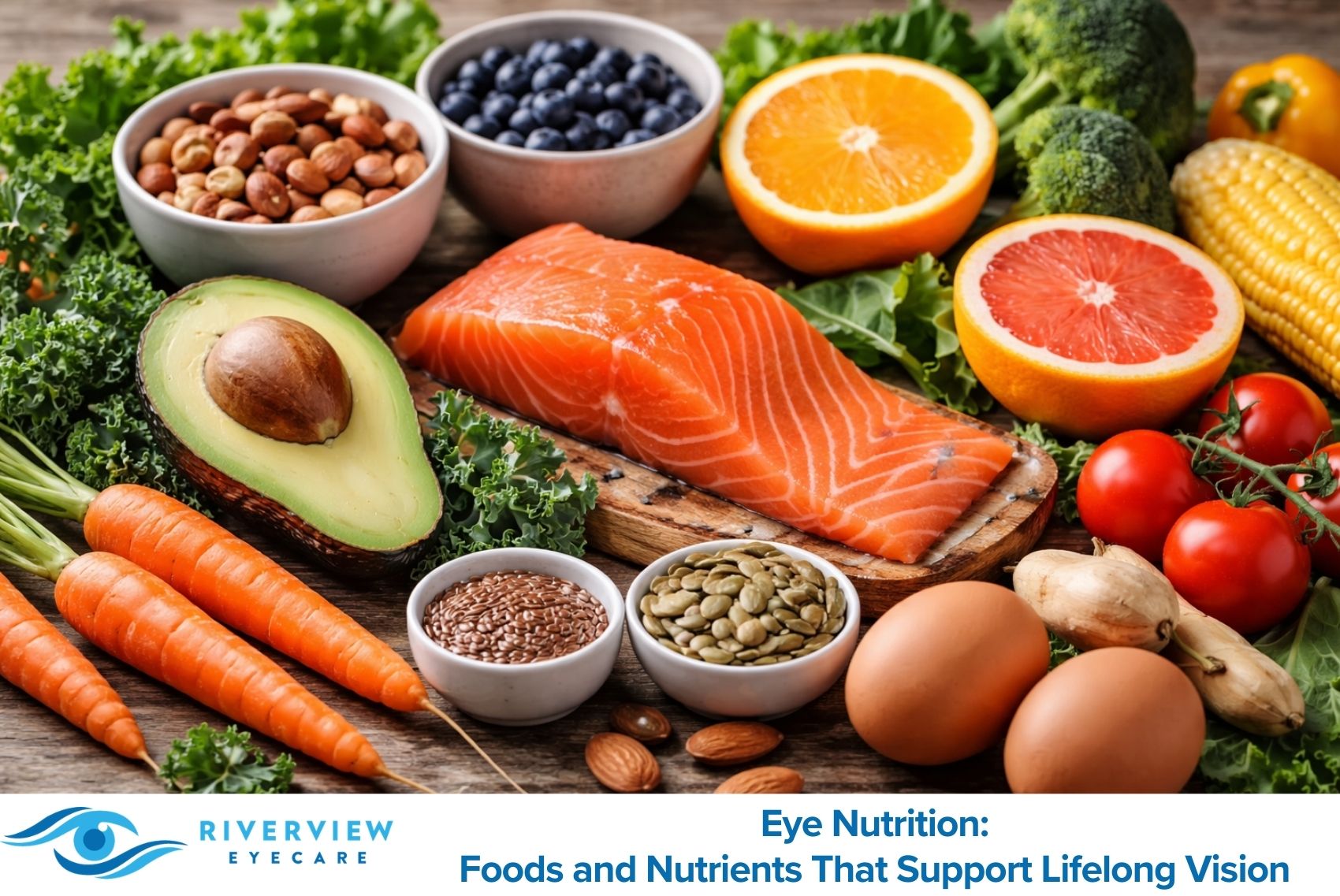
By Riverview Eye Care
Your eyes work hard every day—whether you’re driving, working on a computer, reading, or enjoying time outdoors. Just like the rest of your body, your eyes rely on proper nutrition to stay healthy and function at their best. The right balance of vitamins, minerals, and antioxidants can help protect your vision, reduce the risk of eye disease, and support long-term eye health.
At Riverview Eye Care, we believe that great vision care goes beyond routine eye exams. Understanding how nutrition affects eye health empowers you to make choices that benefit your vision for years to come.
In this guide, we’ll explore the nutrients your eyes need, the foods that support healthy vision, and how you can incorporate eye-friendly nutrition into your daily routine.
Why Eye Nutrition Matters
Your eyes are constantly exposed to environmental stressors such as UV light, blue light from digital screens, and natural aging. Certain nutrients help protect the delicate tissues in your eyes by reducing inflammation, supporting cell health, and defending against oxidative stress.
Proper nutrition can help:
- Reduce the risk of age-related macular degeneration (AMD)
- Support retinal health
- Help prevent or slow cataract formation
- Reduce dry eye symptoms
- Protect eyes from oxidative damage
- Maintain strong night vision
A healthy diet combined with regular eye exams is one of the most effective ways to protect your vision.
Key Nutrients for Healthy Eyes
Vitamin A
Vitamin A is essential for maintaining healthy vision, especially in low-light conditions. It helps the retina function properly and supports the eye’s ability to convert light into signals sent to the brain.
Foods rich in Vitamin A include:
- Carrots
- Sweet potatoes
- Spinach
- Kale
- Pumpkin
- Eggs
A deficiency in Vitamin A can lead to night blindness and other vision problems.
Lutein and Zeaxanthin
These powerful antioxidants are found in the retina and help protect the eyes from harmful light and oxidative damage. They are particularly important for protecting against macular degeneration.
Foods rich in lutein and zeaxanthin include:
- Kale
- Spinach
- Collard greens
- Broccoli
- Corn
- Eggs
These nutrients help filter harmful blue light and support long-term retinal health.
Omega-3 Fatty Acids
Omega-3 fatty acids help maintain the health of the retina and may reduce symptoms of dry eye syndrome. They also support proper tear production and reduce inflammation in the eyes.
Foods high in omega-3s include:
- Salmon
- Tuna
- Sardines
- Flaxseeds
- Chia seeds
- Walnuts
Regular consumption of omega-3s may improve overall eye comfort and visual performance.
Vitamin C
Vitamin C is a powerful antioxidant that helps protect the eyes from oxidative stress and may reduce the risk of cataracts. It also supports the health of blood vessels in the eyes.
Good sources of Vitamin C include:
- Oranges
- Grapefruits
- Strawberries
- Bell peppers
- Brussels sprouts
- Broccoli
Vitamin E
Vitamin E protects eye cells from damage caused by free radicals. It plays a key role in maintaining healthy tissues in the eyes.
Foods rich in Vitamin E include:
- Almonds
- Sunflower seeds
- Hazelnuts
- Avocados
- Spinach
Zinc
Zinc helps transport Vitamin A from the liver to the retina and supports immune health in the eyes. It is also important for maintaining healthy vision in low-light conditions.
Zinc-rich foods include:
- Oysters
- Beef
- Pumpkin seeds
- Chickpeas
- Cashews
Best Foods for Eye Health
While supplements can sometimes help, most eye care professionals recommend obtaining nutrients from a balanced diet whenever possible.
Some of the best foods for eye health include:
- Leafy green vegetables
- Fatty fish like salmon and tuna
- Citrus fruits
- Nuts and seeds
- Eggs
- Carrots and sweet potatoes
- Whole grains
A colorful, nutrient-rich diet often provides the best combination of vitamins and antioxidants for your eyes.
Tips for Improving Your Eye Nutrition
Improving your eye health through nutrition doesn’t require drastic changes. Small adjustments to your diet can make a big difference.
Consider these simple tips:
- Add leafy greens to meals several times a week
- Eat fish rich in omega-3s at least twice per week
- Snack on nuts or seeds for Vitamin E
- Include colorful fruits and vegetables in every meal
- Stay hydrated to support tear production
- Limit processed foods and excessive sugar
Pairing healthy eating habits with routine eye exams helps ensure your eyes receive the care they need.
The Role of Eye Exams in Nutritional Eye Health
Even with a healthy diet, regular eye exams are essential. Eye doctors can detect early signs of conditions such as macular degeneration, cataracts, and glaucoma before symptoms appear.
During your eye exam, your doctor may also recommend nutritional strategies or supplements tailored to your specific needs.
At Riverview Eye Care, we provide comprehensive eye exams designed to protect and maintain your long-term vision health.
Eye Nutrition Q&A
What vitamins are most important for eye health?
The most important vitamins for eye health include Vitamin A, Vitamin C, Vitamin E, zinc, omega-3 fatty acids, lutein, and zeaxanthin. These nutrients support retinal function, protect against oxidative stress, and help maintain healthy vision.
Can diet improve eyesight?
While diet cannot reverse vision problems like nearsightedness or farsightedness, it can support eye health and reduce the risk of developing certain eye diseases such as macular degeneration and cataracts.
Are supplements necessary for eye health?
Many people can obtain essential nutrients through a balanced diet. However, supplements may be recommended for individuals with specific conditions or higher risk factors. Your eye doctor can advise whether supplements are appropriate.
What foods help with dry eyes?
Foods rich in omega-3 fatty acids such as salmon, tuna, flaxseeds, and walnuts may help reduce dry eye symptoms by improving tear production and reducing inflammation.
Do carrots really help your eyesight?
Carrots are rich in beta-carotene, which the body converts into Vitamin A. Vitamin A supports night vision and retinal health, making carrots beneficial for eye health.
How does screen time affect eye health?
Prolonged screen use can lead to digital eye strain, dry eyes, and fatigue. Taking regular breaks, adjusting screen brightness, and maintaining proper nutrition can help protect your eyes.
Can nutrition help prevent macular degeneration?
Certain nutrients such as lutein, zeaxanthin, zinc, Vitamin C, and omega-3 fatty acids may help reduce the risk or progression of macular degeneration when combined with regular eye care.
How often should I have an eye exam?
Most adults should schedule a comprehensive eye exam every one to two years, depending on age, health history, and vision needs.
Protect Your Vision with Riverview Eye Care
Maintaining healthy vision requires a combination of proper nutrition, healthy habits, and routine eye exams. At Riverview Eye Care, we are dedicated to helping patients protect their eyesight with personalized, comprehensive eye care.
If you’re experiencing changes in your vision or simply want to maintain healthy eyes, our experienced team is here to help.
Contact Riverview Eye Care
Riverview Eye Care
13135 Kings Lake Dr #101
Gibsonton, FL 33534
Phone: 813-498-1905