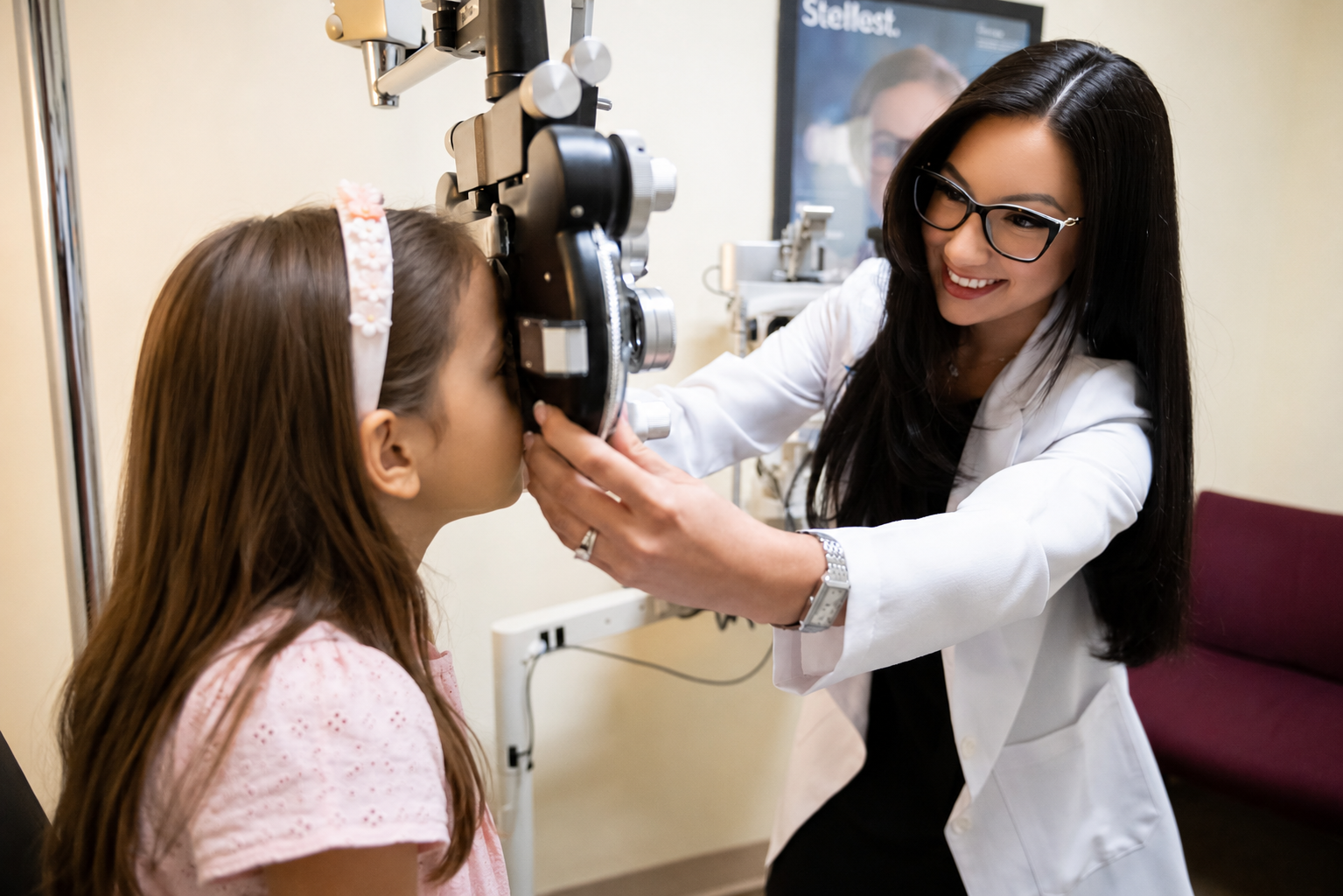
Children learn about the world primarily through their eyes. In fact, experts estimate that up to 80% of learning during the early school years is visual. From reading the board in class to focusing on books, screens, and worksheets, healthy vision plays a critical role in a child’s ability to learn, grow, and succeed academically.
Unfortunately, many vision problems in children can go unnoticed. Kids often assume everyone sees the way they do, so they may not complain about blurry vision, eye strain, or difficulty focusing. That’s why annual eye exams are one of the most important steps parents can take to support their child’s education and overall development.
At Riverview Eye Care, we are committed to helping children maintain clear, healthy vision so they can perform their best in school and everyday life.
Why Vision Is Essential for Learning
When children struggle in school, vision issues are sometimes overlooked. Yet problems such as nearsightedness, farsightedness, or focusing difficulties can significantly affect a child’s ability to read, write, and stay engaged in class.
Common classroom tasks that rely on good vision include:
- Reading textbooks and digital screens
- Writing assignments and completing worksheets
- Seeing the board or projector clearly
- Hand-eye coordination for sports and activities
- Maintaining focus during long periods of study
If a child cannot see clearly or comfortably, they may experience:
- Difficulty concentrating
- Slower reading speeds
- Headaches or eye strain
- Reduced academic performance
- Frustration with schoolwork
Routine eye exams help detect and correct these issues early, ensuring children have the visual tools they need to succeed.
Common Vision Problems in Children
Several vision conditions commonly affect school-age children. Without an eye exam, many of these problems can remain undiagnosed.
Nearsightedness (Myopia)
Children with myopia can see objects up close clearly but struggle to see things far away, such as the classroom board.
Farsightedness (Hyperopia)
This condition can make it difficult to focus on close-up tasks like reading or writing.
Astigmatism
Astigmatism causes blurred or distorted vision at all distances due to an irregular shape of the cornea.
Eye Coordination Issues
Some children experience difficulty with eye teaming or tracking, which can make reading and focusing challenging.
Amblyopia (Lazy Eye)
Amblyopia occurs when one eye is weaker than the other and can lead to long-term vision problems if not treated early.
Early detection through annual exams is key to addressing these concerns before they affect learning and development.
Signs Your Child May Need an Eye Exam
Parents and teachers should watch for signs that may indicate a vision problem. These symptoms can include:
- Squinting frequently
- Holding books or screens very close to the face
- Complaining of headaches or tired eyes
- Losing their place while reading
- Avoiding reading or schoolwork
- Difficulty seeing the board in class
- Tilting the head or covering one eye
If you notice any of these behaviors, scheduling a comprehensive eye exam can help determine whether a vision issue is present.
Why Annual Eye Exams Matter
Children’s eyes develop rapidly, and their vision can change from year to year. Even if a child passed a school vision screening, that screening may not detect all potential vision problems.
Annual comprehensive eye exams provide several benefits:
- Early detection of vision problems
- Monitoring of eye development
- Updated prescriptions for glasses if needed
- Identification of eye health concerns
- Support for academic success
Routine eye care helps ensure that children can fully engage in their education and daily activities without visual barriers.
How Riverview Eye Care Supports Children’s Vision
At Riverview Eye Care, our team understands how important healthy vision is for a child’s growth and academic performance. We provide comprehensive eye exams designed specifically for children to evaluate:
- Visual clarity and sharpness
- Eye alignment and coordination
- Focusing ability
- Eye health and development
If glasses or treatment are needed, we help families find comfortable, effective solutions tailored to each child’s needs.
Our goal is to ensure every child has the clear vision they need to learn confidently, participate in school, and enjoy everyday life.
Frequently Asked Questions (Q&A)
How often should children have eye exams?
Children should generally have a comprehensive eye exam once a year, especially once they begin school. Annual exams help monitor vision changes and ensure optimal visual development.
At what age should a child first see an eye doctor?
Children should have their first eye exam around 6–12 months old, another around age 3, and then annually once they start school, unless otherwise recommended by their eye doctor.
Are school vision screenings enough?
School screenings are helpful but do not replace comprehensive eye exams. Screenings often only check distance vision and may miss issues like focusing problems, eye coordination difficulties, or early eye health conditions.
What happens during a children’s eye exam?
During a pediatric eye exam, the doctor will check visual acuity, eye alignment, focusing ability, and overall eye health. The exam is designed to be comfortable and engaging for children.
Can vision problems affect reading skills?
Yes. Vision problems can make it difficult for children to track words on a page, maintain focus, or clearly see text, which can slow reading and comprehension.
Will my child need glasses?
Not every child needs glasses, but if a vision issue is detected, glasses may help improve clarity, comfort, and school performance.
What if my child doesn’t complain about their vision?
Many children do not realize they have a vision problem because they assume their vision is normal. Regular eye exams are the best way to detect issues early.
Do digital screens affect children’s eyes?
Excessive screen time can contribute to eye strain, dryness, and fatigue. Regular eye exams and healthy screen habits help protect children’s vision.
Schedule Your Child’s Eye Exam Today
Supporting your child’s vision is one of the most effective ways to support their education and long-term success. Annual eye exams ensure that vision problems are identified early and treated appropriately.
Riverview Eye Care is proud to provide comprehensive eye care for children and families, serving Riverview and the surrounding communities.
Riverview Eye Care
13135 Kings Lake Dr #101
Gibsonton, FL 33534
Phone: 813-498-1905